
Our Training Philosophy
Science-Based and Force-Free
At Trusted Tails, our work is grounded in ethical training methods backed by science!
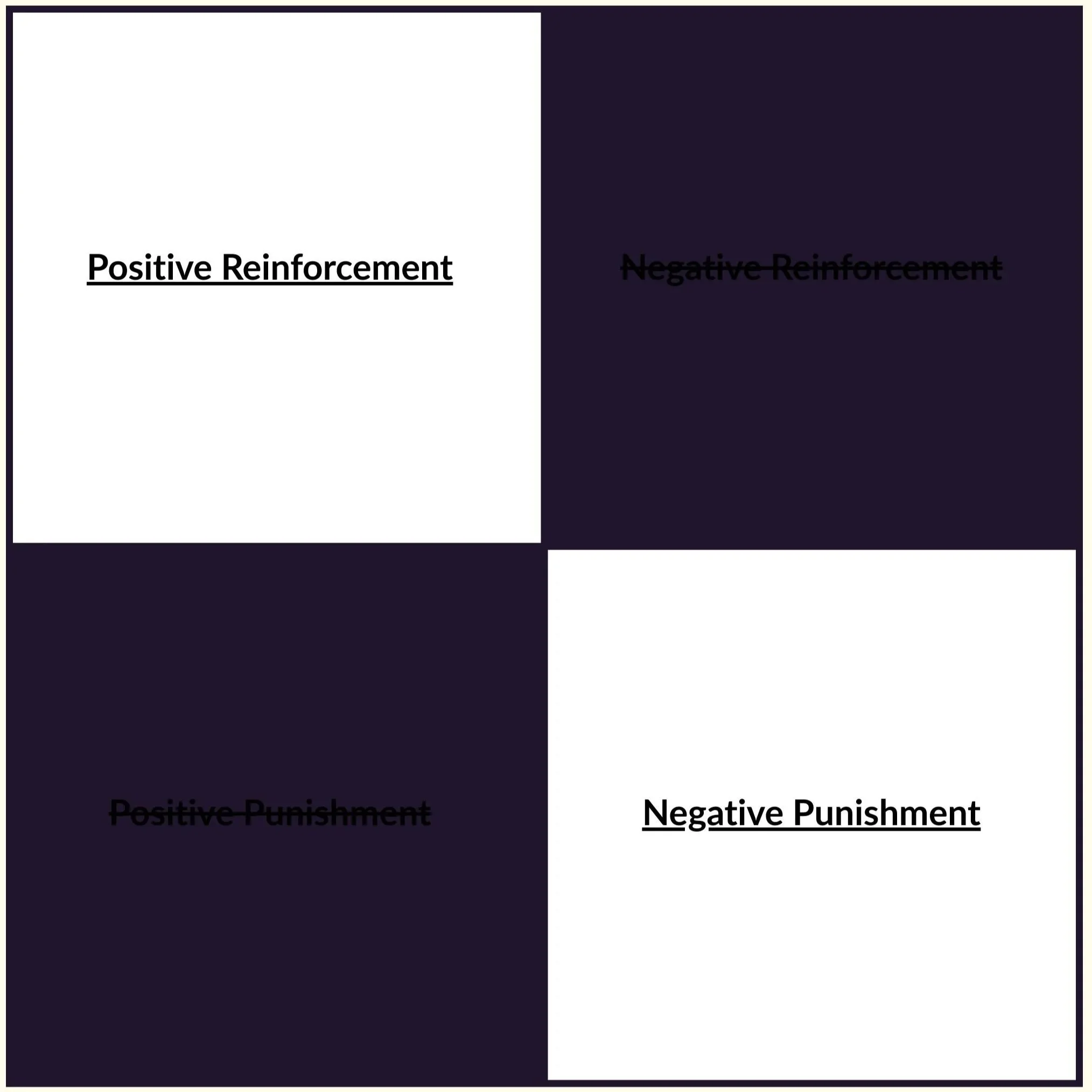
Dog training is built on four learning “quadrants.” These quadrants describe how behavior changes — either by adding something or removing something to increase or decrease a behavior.
Out of the four, we intentionally use two:
Positive Reinforcement
Example:
Your dog sits → they earn a treat.
Because sitting earns something good, they are more likely to sit again.
We focus heavily on this method because it builds clarity, confidence, and willingness to participate.
This means we add something the dog likes to increase a behavior.
Negativc Punishment
This means we remove something the dog wants to decrease a behavior.
This does not mean intimidation or physical punishment. It simply means removing access to something desirable in a calm and structured way.
Example:
Your dog jumps for attention → attention stops.
When jumping no longer gets a reward, the behavior decreases.
We do not rely on fear, intimidation, pain, or force.
Through decades of peer-reviewed research and applied behavior science, professionals in the field have consistently shown that positive reinforcement–based training is the most effective and humane way to create lasting behavior change.
Backed by Science
Backed by Experience
Backed by Results
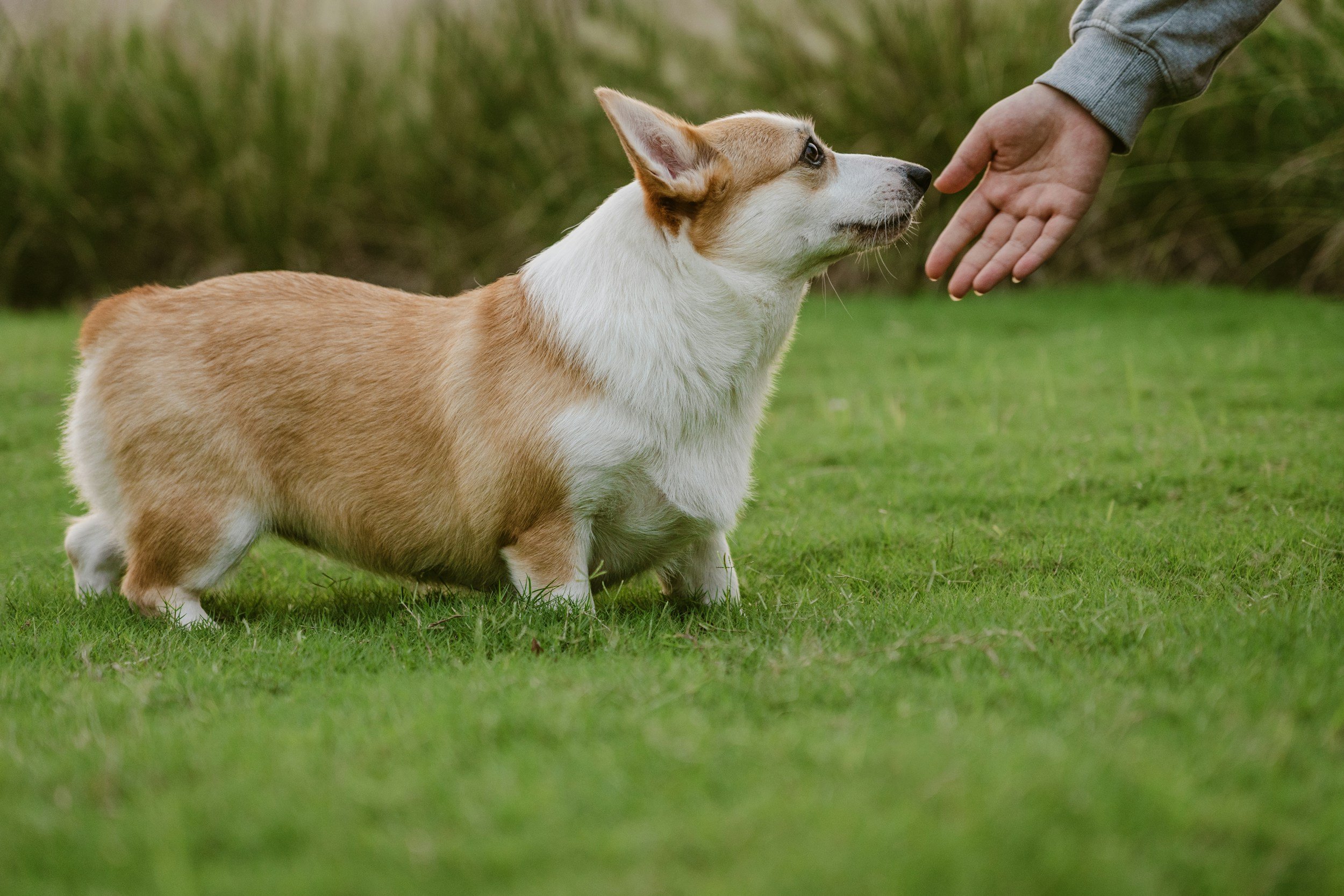
Behavior is Communication
Before we change a behavior, we must first understand it by asking:
Why is this happening?
What was the antecedent?
What is the dog feeling?
What need is or isn’t being met?
Dogs are individuals. They have different personalities, sensitivities, learning histories, and priorities. There is no one-size-fits-all solution. A plan that works beautifully for one dog may not work for another. That’s why every training plan is tailored to the individual dog and household.
Creating Lasting Change
Lasting change doesn’t happen from a single session. It happens through structure and consistency.
We focus on:
Addressing the root of the problem instead of just the symptoms.
Teaching clear replacement behaviors
Reinforcing those behaviors through repetition
Practicing skills in real-life environments and situations
Adjusting communication inside and outside the home
Emotional Regulation Comes First
Especially in cases involving fear, anxiety, or reactivity, obedience alone is not enough. A dog that feels overwhelmed cannot make good choices.
To help them cope with everyday life, we must help them by:
Building calm responses
Teaching coping skills
Gradually increasing confidence
Reducing stress triggers in structured ways
When emotional stability improves, behavior becomes easier to change.
The Human Side of Behavior
Behavior challenges don’t just affect dogs — they affect families.
Frustration, embarrassment, stress, and confusion can build quickly when things feel out of control.
We work with families to:
Adjust daily routines
Improve communication patterns
Set realistic expectations
Create systems that are sustainable
Training must fit into your real life. If it’s too complicated or overwhelming, it won’t stick.
Our goal is not just a well-trained dog — it’s a calmer, more confident household.
Training and behavior change that holds up to the test of time.
We are focused on steady, reliable progress that holds up:
On walks
When guests arrive
In public spaces
In everyday routines
Ready to Get Started?